NOT YOUR USUAL SUSPECTS

A group blog featuring an international array of killer mystery, suspense, and romantic suspense writers. With premises and story lines different from your run-of-the-mill whodunits, we tend to write outside the box. We blog several times a week on all topics relating to romantic suspense and mystery, our writing, and our readers. We welcome all comments and often have guest bloggers. All our authors can be contacted separately, too, using their own social media links.

We find our genre delightfully, dangerously, and deliciously exciting - join us here, if you do too!

NOTE: the blog is currently dormant but please enjoy the posts we're keeping online.


Julie Moffet . Cathy Perkins . Jean Harrington . Daryl Anderson . Nico Rosso . Maureen A Miller . Sandy Parks . Lisa Q Mathews . Sharon Calvin . Lynne Connolly . Janis Patterson . Vanessa Keir . Tonya Kappes . Julie Rowe . Joni M Fisher . Leslie Langtry
Showing posts with label writing habits. Show all posts

Friday, February 24, 2017

Guest Author Gilian Baker: Prepare for a great day of writing


Welcome to an occasional series of guest bloggers.
Today our visitor is GILIAN BAKER.
We hope you enjoy these posts as well as our usual fare!
~~~from the Not Your Usual Suspects team~~~


Being Gilian: How I Mentally Prepare
for a Great Day of Writing

For writers, having the right mindset is a big part of the process of writing anything worth reading. I can easily stress myself out about needing to produce a magnificent chapter, especially when deadlines are looming. When I’m in that freaked out, “gotta-get-it-done” space, the Muses are nowhere to be found—just when I need them most. Today I wanted to share with you a few of the tricks I use to mentally prepare for a great day of writing—for being Gilian.

Meditate—I’ve been meditating for many years now, and I like to do it first thing in the morning. It centers me and helps me keep focused on the moment I’m living in instead of the future full of deadlines I’m worried about. Meditating in the morning sets the tone for my whole day.

Streamline my day—As I mentioned in the intro, when I’m super busy, it’s a challenge for me to get into my creative space. I personally need quiet time to ponder and sketch out ideas before, during and after writing. So, when I’m preparing for a day full of writing fiction, I clear my schedule as much as possible. Trying to squeeze it into a full day never works for me.

Write in the morning—Since I’m a morning person, I almost always write during that time. By the late afternoon, my creative spirit has dwindled, but in the morning I feel fresh and ready to create. I believe one of the most important things for writers to understand about themselves is when their creative time is and then to use it faithfully.

Journal—It’s typical for me to stop and jot down ideas that pop into my head about other scene as I write. Or if I come to a place in the story where I’m not sure what direction I should take, I’ll journal out my ideas to see which one feels right. It’s just another way I avoid forcing the words to come. When I’m writing, I always have my book journal and favorite fountain pen handy.

Reread the last chapter—Being a writer is kind of like being an actor. I find I need to get into character to write fiction. Rereading the last chapter or two often helps me prepare for the role I need to play that day.

Drink out a special mug—After I’d chosen my pen name and was elbow deep into writing Blogging is Murder, my mom bought me a mug with a big ‘G’ on it. I only drink out of it when I’m Gilian—when I’m writing a book.

Listen to different music—I personally can’t listen to music with lyrics when I work, but I do enjoy having soothing music playing in the background. I’m fond of chanting, Native American flute music and other “new age” type music. I have a special playlist that I play only when I’m being Gilian.

Use special aromatherapy scents—Our olfactory system triggers memories quickly, so I like to use a special blend of refreshing essential oils in a diffuser while I write. This prompts the memories of past successful writing sessions and keeps me creative for hours without fatigue.


Sit in my writing chair—I made room in my home office for my chair-and-a-half and ottoman. I feel more creative when I’m not sitting at my desk where “work” happens. My writing chair is positioned right across from the window, so I can look outside when I stop typing to ponder what comes next.

~~~~~~~~~~~~~~~~~~~~

About Gilian Baker
Gilian Baker is a former writing and literature professor who finally threw in the towel and decided to just show ‘em how it’s done. She has gone on to forge a life outside of academia by adding blogger & ghostwriter to her CV. She currently uses her geeky superpowers only for good to entertain cozy mystery readers the world over. When she’s not plotting murder, you can find her puttering in her vegetable garden, knitting in front of the fire, snuggled up with her husband watching British mysteries or discussing literary theory with her daughter.

In her next life, she fervently hopes to come back as a cat, though she understands that would be going down the karmic ladder. She lives in Flagstaff, Arizona with her family and their three pampered felines.

Blogging is Murder Synopsis

Though she was certainly born with all the traits of a world-class private detective, blogger Jade Blackwell believed she would do nothing more than solve the murders in her latest favorite cozy mystery book.

Set in mountainous south-eastern Wyoming, Jade Blackwell lives in a log home in the quaint village of Aspen Falls with her husband, Christian and daughter Penelope (Ellie). She left her life as a tenured college English professor at the University of Wyoming four years ago, sick of the bureaucracy, mounds of essays to grade and apathetic students. She turns to blogging and ghostwriting as her new career.

Jade’s promising career as a blogger halts abruptly when she learns of a hacker who is controlling her friend and fellow blogger Liz Collin’s business remotely. When the hacker is found dead in her home, Liz is thrown in jail.

Determined to help her friend regain her life and livelihood, Jade teams up with Liz’s reluctant lawyer, Gabriel Langdon, to get Liz off the hook and out of jail. What she learns will break the case wide open, while unraveling her faith in humanity and the safety she feels living in the Rocky Mountain hamlet she calls home.

An exciting thrill ride from the first page, to the last. Read Gilian Baker’s Blogging is Murder, the first book in the Jade Blackwell cozy mystery series!


Contact Gilian Baker directly at mailto:Gilianbakerauthor@gmail.com

Monday, May 16, 2016

Where There's Smoke

Burn-out.

I'm not sure there is a more dreaded word in the writerly vocabulary. Some writers get panicky over Writer's Block, but block just means you took a wrong turn somewhere and you need to shift into reverse and find your way back to the road. Maybe there's a problem with the current project or maybe the current project IS the problem, but either way, Writer's Block is fixable.

Burn-out means there is no more road.

And your engine is smoking.

And the landscape around you is on fire.

A few years ago--about five years ago, in fact--I burned out. I had to cancel a slew of projects--in some cases it meant actually paying back advances. It was disastrous. I tried to be, well, not upbeat. It's hard to be upbeat about failing to meet commitments, having to repay money you've already spent, and disappointing your fans. But I tried to be pragmatic about it. Tried to look at it as a positive thing. I was pretty sure (though in my heart of hearts not absolutely positive) that I would be able to write again if I just gave myself time to refill the creative well.

So I took a sabbatical and used that time to do exactly that. I spent time with family and friends, I put a healthy schedule into place that included not eating at my desk, ending the work day at five-ish, taking vacations and even not writing every weekend. All those things helped once I got back to work, but getting back to work took a really long time. It took the full year. And while I read a lot and watched documentaries and movies and got out and about...I mostly worked during that year because a lot of my previously published work reverted to me right about then. And I was investigating translations and audio and print. All those little revenue streams kept me financially afloat during the time that I was not producing new fiction.

Since that time I've been pretty careful, pretty watchful to make sure that I did not get into trouble again. So imagine my surprise when I realized a couple of weeks ago that I was teetering once more on the edge of burn-out.

How could this be? I was working a reasonable (fairly reasonable) schedule, I was taking time out for family and friends, I took vacations and even traveled. Okay, I was falling back into the pattern of mostly working late into the evening and on weekends, I was committing to too many projects, and I was starting to panic over all the stuff there wasn't time to deal with (career planning, marketing strategies, new and additional revenue streams...)

The good news is this time I recognized the symptoms. I could have forced my through the current project but it would likely have been the final project of the year--and maybe the final project for next year as well. Instead, I faced facts and, as embarrassing as it was, told my publisher what was happening. Happily I got an extension, but even if the project had been cancelled it would be have been better than being creatively paralyzed for the foreseeable future.

Money will be tight because my financial health is built on that 90-120 day cycle we all live and die by now. But better that money is tight than having the bank cut me off entirely--and that's what we risk when we repeatedly overdraw from our creative resources.

The most important asset we have as writers is our creative energy. At all costs that energy has to be protected and nurtured. It means getting out of your head and into the real world on a regular basis. It means taking care of your physical health--get off your butt!--and it means preserving your sanity by not spending too much time on social media. There are a lot of variables in a writing career and some things can be fudged and some things can be faked, but the one thing we writers cannot do without are the words.

When we lose the words, the story stops. And when the stories stop, that is truly The End.

Now -- before you're in trouble -- is the time to take stock of your creative resources. How tired are you? How much effort do you put into replenishing that creative well? Do you have a career game plan that doesn't involve constantly producing new books to stay afloat?


Friday, November 1, 2013

I SPY: Writing Challenges

Join the authors and friends of Not Your Usual Suspects for an occasional series of posts about their world of reading, writing and publishing.

Short and sweet, hopefully both informative and entertaining - join us at I-Spy to find out the how's and why's of what we do.


TODAY'S POST: I-Spy something beginning with ...


WRITING CHALLENGES

Today, a couple hundred thousand writers are embarking on an annual challenge known as NaNo, or NaNoWriMo, short for National Novel WritingMonth. A month known by the rest of the world as November.

The goal? Starting November 1st, write like mad and produce 50,000 words by 11:59 p.m. on November 30th. Yes, with the holidays and madness of everyday life, participants are expected to throw caution to the wind and write whatever words come out of their fingertips. The final product isn’t expected to be coherent, but it is hoped to give the author something he/she can shape and mold in the coming months.

NaNo’ers aren’t the only writers motivated by a challenge. There are other challenges out there, designed to encourage productivity. I’m part of the Ruby-Slippered Sisterhood, a group of writers dedicated to sharing our experiences and tips on the craft. Each winter for the past few years, we’ve hosted the Winter Writing Festival from early January until the last day of February. For people who thought it was insane to follow through on a 50k-word project during Thanksgiving and Christmas-shopping season, this is a good place to get re-committed to their manuscripts. Plus, YOU set YOUR OWN goals. Need to catch up on reading industry/craft magazines? That could be a daily goal. Have to finish judging a packet of contest entries? Goal. Need to crank out 50k? Goal. And we offer prizes to keep participants motivated, and checking in to motivate others. (The WWF site is only maintained during the festival, so check back in mid-January, or check the Ruby-Slippered Sisterhood site for more information on how to sign up, closer to the start date.)

Why does one sign up for these descents into madness? Writing challenges offer a shock to the system that can rebalance and recommit a writer.

Here’s a list of the benefits I’ve noticed via participation:

  • Sparking new ideas by becoming immersed in a project. You eat, breathe, and dream your manuscript when you’re dedicated to it. When your brain is spending so much time processing your story, ideas can come at you anytime, day or night.

  • Sense of accomplishment. When, at the end of the specified time period, you look up and notice your word count—like, really step away and notice the world again—you’ll be shocked by how productive you can be. It can be done. You’ll never again believe, “I can’t do this.”

  • Finish the project! Thought 50k isn’t always long enough to complete a project, for many writers, that kind of word production is a HUGE accomplishment. And many writers I know, who want to become published but have been working on the same book for years, never reach “the end.” NaNo and other challenges go a long way toward reaching those goals, and showing the writer they can succeed.

  • BICHOK and narrowing your world. While committing to NaNo, it is perfectly okay to tell the world to leave you alone because you are a serious writer. The permission to BICHOK ("bottom in chair, hands on keyboard") can be freeing. You're even encouraged to let housework slide.

  • Setting goals and building on them into the new year. Some people think NaNo is much like throwing a person into a pool to teach them to swim. But really, it’s all about developing habits, pushing yourself to the limit, and seeing what you’re truly capable of. When the going gets tough, the tough get going, right? So are you tough enough? And if you learn to make writing a daily habit, well, that's really the ultimate goal, right?

  • Supportive community. The NaNo site has a library of supportive letters (called "pep talks") from fellow writers, as well as links that can connect you to a NaNo group in your local community, where you can meet up to support each other, sprint, and commiserate. The Winter Writing Festival hosts online chats that allow sprinting in short increments (usually twenty or thirty minutes, several times over a couple-hour period) that encourages word production and provides writers a community in which to vent, brainstorm, and connect.


But if a commitment of a month or more seems daunting, there are other writing challenges that are much shorter—as in a week, or even an hour. One of my online RWA® chapters hosts BiaW (Book in a Week) four times a year. Each installment is a week-long program where participants sign up to write as many words as possible within a week. But you set your own pace, report your word count daily, and contribute to a “team,” whose total is compared to the opposing team, so there’s a bit of friendly competition to keep motivation going.

Need an even shorter commitment? If you’re on Twitter, seek out other writers using the #1k1hr hashtag to connect with those wanting to pop out 1,000 words in an hour-long sprint.

Or, if you're looking for a different kind of commitment, pair up with an accountability buddy—someone to whom you email your word count daily, weekly, or however you choose to set it up. Someone who will cheer you on as you progress or take you to task if you're letting yourself slide. And you can reciprocate by doing the same for them.

If you’re up for the NaNo challenge, come “buddy” with me. I’m user name “Anne Marie B.” I hope to see you there, but if these programs don’t work for you, I encourage you to find some way to challenge yourself. The writer within will thrive!

Have you done NaNo before? How about other writing challenges? Or have you used similar techniques to face other challenges for other passions/goals in your life? Please share! 

Anne Marie has always been fascinated by people—inside and out—which led to degrees in Biology, Chemistry, Psychology, and Counseling.  Her passion for understanding the human race is now satisfied by her roles as mother, wife, daughter, sister, and award-winning author of romantic suspense.  
She writes to reclaim her sanity.

Find ways to connect with Anne Marie at www.AnneMarieBecker.com.


********************************


FUTURE POSTS will cover:
Kindlegraph / the art of research / writing male/male romance / rejection and writer's block / building suspense / writing love scenes / anti-piracy strategies / audio books / interviews with editors and agents / using Calibre.
We welcome everyone's constructive comments and suggestions!

Monday, June 3, 2013

I-SPY: Forming and Transforming Habits


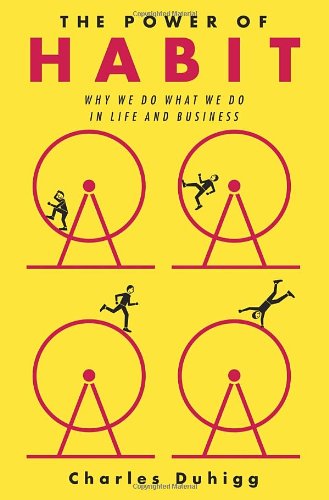
For my local book club, I recently read THE POWER OF HABIT:Why We Do What We Do in Life and Business by Charles Duhigg. In general, I don't love nonfiction, unless it involves research for one of my books, so I wasn't particularly excited about this pick. But I’ve had a few habits I’ve wanted to change for years (stress eating, anyone?) and needed new strategies. (And I like gathering with my fellow book-lovers over wine and appetizers to chat about books.) So I gave it a whirl.

I’m happy to report that I found THE POWER OF HABIT very interesting, indeed. The concept was rooted in behavioral psychology methods, particularly in how the brain becomes trained to expect a particular reward associated with a specific cue. The kicker is creating a “craving” for that reward that will become associated with the cue.

For example, a man who worked in advertising in the early 1900s was given the task of selling a new brand of toothpaste. At the time, brushing teeth wasn’t even the norm. His campaign helped to make it a habit by suggesting in the advertisements that teeth "formed a film" during the day. This was genius because the moment a readers saw that, they have the urge to run their tongues over their teeth. (I know I did.) Lo and behold, yes, it seems there is a film there. Because that's normal. The film isn't particularly bad for your teeth, but it became the cue. He associated this cue (the feeling of a "film" on your teeth) with a reward (the feeling of clean teeth). 

But what scientists found later was that the brands of toothpaste that were selling well contained a certain (unnecessary) ingredient such as citric acid that created a craving...they made the gums tingle. Teeth-brushers came to crave the tingling sensations, and didn't feel their teeth were clean unless they felt that reward from brushing.

So it's the behavioral cycle of cue-craving-reward that led to habit formation.

The book contained many examples of how individuals and corporations created successful change by analyzing habits, but what I was most struck by is how I’d done this myself with my writing. I started writing in 2001, but I tell people I didn’t “seriously” start writing until 2006, when I made it a priority in my life. A daily habit. And now, if I don’t write for a couple days, I start getting the “itch” to get some words on the page. 

But the easiest example of how I've created a habit involves Starbucks. In the past couple years, I’ve found my local coffee shop is the easiest place to get a large quantity of writerly things done in the most efficient amount of time. My home is littered with other cues...dirty dishes that need to be done, piles of laundry that need to be folded. But at Starbucks, my only cue is my computer, and the smell of coffee that gets my brain going. I get my coffee drink of choice, set up my computer, and get down to work for two or three hours. I make the most efficient use of my writing time when I’m in that environment. 

I created a cue (the Starbucks environment & drink) that generated a reward (writing work done!). And I craved that feeling of success (and, probably, the coffee).

Now, if only I could create healthier habits for exercise and diet...will have to work on that one.

What patterns would you change if you could (and if you dare to share)? What cues and rewards could you employ to create better habits?

More Popular Posts