NOT YOUR USUAL SUSPECTS

A group blog featuring an international array of killer mystery, suspense, and romantic suspense writers. With premises and story lines different from your run-of-the-mill whodunits, we tend to write outside the box. We blog several times a week on all topics relating to romantic suspense and mystery, our writing, and our readers. We welcome all comments and often have guest bloggers. All our authors can be contacted separately, too, using their own social media links.

We find our genre delightfully, dangerously, and deliciously exciting - join us here, if you do too!

NOTE: the blog is currently dormant but please enjoy the posts we're keeping online.


Julie Moffet . Cathy Perkins . Jean Harrington . Daryl Anderson . Nico Rosso . Maureen A Miller . Sandy Parks . Lisa Q Mathews . Sharon Calvin . Lynne Connolly . Janis Patterson . Vanessa Keir . Tonya Kappes . Julie Rowe . Joni M Fisher . Leslie Langtry
Showing posts with label Waltham Black Act. Show all posts

Wednesday, September 20, 2017

The Waltham Black Act

Writing historical mystery is a different kind of skill, I’ve found. You have to do the research, then transmit that research to the reader without being boring, and make it all work as if it’s the normal way of going on. In the brutal eighteenth century, when you could be hanged for stealing a penny loaf, it’s hard not to apply modern judgments to the crimes, and to add a purely twenty first century perspective.
In the Georgian era, the law worked very differently to the way it does now. That’s what you get for having an unwritten constitution. It evolves, and there are very few Acts of Parliament that signal a drastic change from what went before. Usually, they develop bit by bit.
However, in 1723 a law did change things up. It was called the Waltham Black Act.
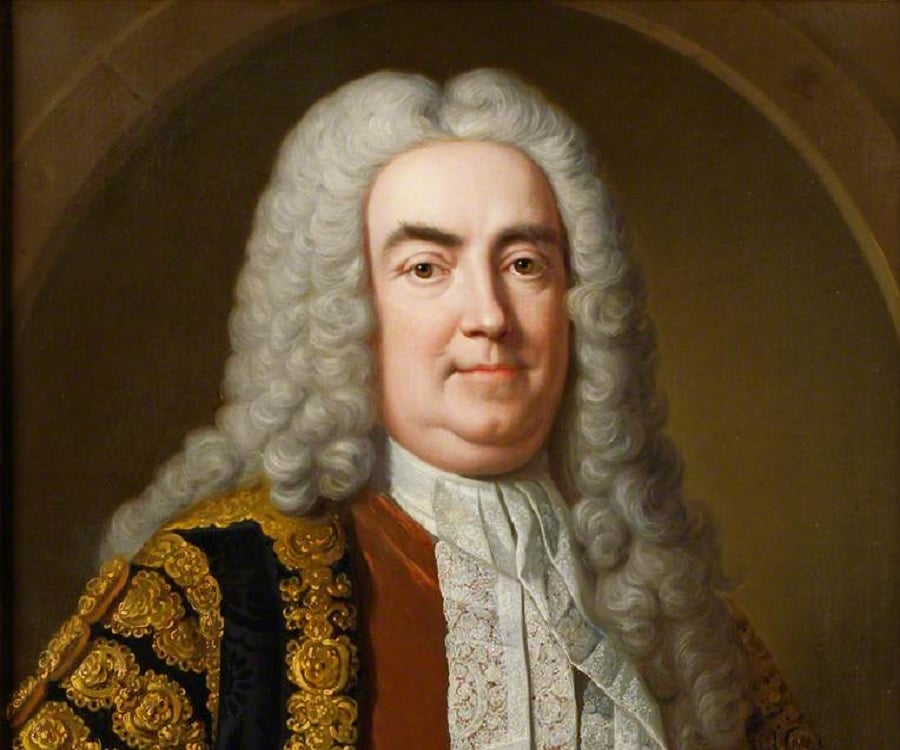
The first Prime Minister (itself a term intended to be derogatory, but then got turned around to describe the position), Robert Walpole instituted it. It was primarily intended to counter one of the three scourges of the eighteenth century, poaching. When property was the basis of power and most wealth was made from crops and livestock, before the industrial revolution kicked in, poaching was a crime that hit right at the heart of society. If I called it “rustling,” you’d get a better idea of what the poaching gangs were doing. Not purloining a few rabbits from the squire’s land, but stealing flocks of sheep, prime beef herds and key breeding stock.
Land was protected by a complicated network of sometimes contradictory laws, and confusion led to key criminals escaping lightly. The Waltham Black Act was intended to do away with all those, and institute one clear law to replace them. But in the process, it added 50 crimes to the capital roster. 50 more crimes a person could be hanged for. And they were. Poaching, it turned out, was only the excuse used to tighten the law and make what came to be known as “The Bloody Code.”
It swung power decisively to the ruling class, and formed the basis of what came to be the eighteenth century oligarchy. Owners of large estates had massive powers that went well beyond their boundaries. The poor and smallholders, already crippled by Enclosures (the enclosing of common land) were forced down even more, a state that was to last for the next hundred years.
Why Black? We’ll not, as you might think, because it was a terrible idea, but because poachers blackened their faces in order to remain unseen at night when they did their work.
As a result, a child could be hanged for stealing goods worth more than a shilling. This also gave a magistrate certain power, because he (and it was always he) had the power to value the goods. It wasn’t what the shopkeeper or landowner priced the goods at, it was what the court considered they were worth. That led to corruption, but it also gave the courts a loophole for leniency.
People hanged or punished under this law were known as “blacks,” which can be confusing to the researcher!
The Black Act was finally taken off the law books by Robert Peel. But by then its philosophy was outdated. Power was rapidly moving to the newly enfranchised middle class, who didn’t own land to breed cattle, but to dig for coal. Towns were shooting up, and the rural poor were moving there to work in factories. For the first time in history, a police force was established. And the new age was beginning.


Friday, February 10, 2017

Black Act

Researching for a new book, I’ve again become aware of the difference between the way the law was administered in the eighteenth century compared to today. Today, the laws are as precise as possible, leaving small margins to

be amended by case law. Back then, the interpretation was the thing.
After the Glorious Revolution had settled down, and the great constitutional realities settled down a bit, it was time to reform criminal law. In 1723, an Act of Parliament came into force. It was generally known as the Waltham Black Act. Several others after reinforced and amended the Act, but this is the way most criminals were treated for the next hundred years. The system it instituted was called the Bloody Code.
It meant you could be sentenced to death for stealing a penny loaf. Thefts were assessed in value, and the thief punished accordingly. Two hundred offences were listed, and their corresponding punishments. Basically, death for almost everything. The Waltham Acts were mainly concerned with offences against property, but other acts took care of the rest.
Death could be commuted to transportation, at the judge’s discretion. The aim was deterrence. Unfortunately, it didn’t work as a deterrent, but they didn’t have today’s psychologies to help explain why.

After the collapse of the South Sea Bubble in 1720, social unrest rose. What made it worse was that Britain wasn’t at war with anybody, so unemployed soldiers added to the newly poor. Poaching increased and the Act was originally intended to counter that. However, the other crimes outlined in the Act weren’t all connected with poaching. You could be arrested and hanged for firing a weapon in a house, as long as it could be shown you were aiming at somebody.
The people who were never short of a job were the hangmen. They were kept busy. As well as the capital crime of murder and manslaughter, not covered by the Act, and treasonable offences like piracy, there was a lot that would cause a person to have his or her neck stretched.
But there were also ways to avoid that fate. One was Benefit of Clergy. For a first offence, the accused could be released with a warning if they could read a passage from the Bible. That proved their literacy, and the authorities were keen to promote literacy. That policy, at least, was a success, because at the end of the century the vast majority of society could read and write. However, whether the Benefit of Clergy helped is open to doubt. For one thing, they always chose the same passage, so all the perpetrator had to do was to memorize it. And people used it more than once. The courts were very busy, and the prisoner up before the bench might have been there before. It benefited what we might call professoinal criminals more than the poor, starving urchin stealing a few apples.
The courts had a considerable degree of discretion, and in time, they learned to use it. If a widow with children came up before a compassionate magistrate, she might find that the value of whatever she had stolen was downgraded, deliberately undervalued so the courts could release her or give her a lenient sentence. A boy who’d been condemned before, or a man known to consort with theives, would find himself, for the same offence, sent to Australia or to Newgate Prison to await the next hanging day.
Jails were not meant to hold prisoners for long. They were places of transit, where someone would be sent to serve a short sentence, or to await transportation or hanging. The stars of the underworld at this time were the highwaymen. Most were caught and hanged before their thirtieth birthday, so it was a short career. But they made a splash at their hangings, wearing their best clothes and making a bravura speech from the scaffold, to the cheers of the crowd gathered to watch the event.
There were exceptions. Debtor’s prisons (debt wasn’t part of the Black Act) could hold their prisoners for years while they paid off their debts, for instance, and the system was clogged, so people could spend much time in jail. Conditions were primitive, with people sleeping on floors and eating foul food.
The system we’re familiar with today only really started in the early nineteenth century. Back then it was a lot more vicious - but hardly black and white!


More Popular Posts