NOT YOUR USUAL SUSPECTS

A group blog featuring an international array of killer mystery, suspense, and romantic suspense writers. With premises and story lines different from your run-of-the-mill whodunits, we tend to write outside the box. We blog several times a week on all topics relating to romantic suspense and mystery, our writing, and our readers. We welcome all comments and often have guest bloggers. All our authors can be contacted separately, too, using their own social media links.

We find our genre delightfully, dangerously, and deliciously exciting - join us here, if you do too!

NOTE: the blog is currently dormant but please enjoy the posts we're keeping online.


Julie Moffet . Cathy Perkins . Jean Harrington . Daryl Anderson . Nico Rosso . Maureen A Miller . Sandy Parks . Lisa Q Mathews . Sharon Calvin . Lynne Connolly . Janis Patterson . Vanessa Keir . Tonya Kappes . Julie Rowe . Joni M Fisher . Leslie Langtry

Monday, May 22, 2017

Is Your Reading Palate Biased?

I spent last weekend in California wine country and must admit to imbibing a few select years. Although, not a connoisseur of the fermented grape product, I’ve always considered myself more of a rose/red wine type gal, and have been known to steer away from anything but sweet white wines. That left me surprised, when at one tasting, I relished all the samples, including the whites.
Glasses lined up in front of each person, waiting for the wine to be adding for sampling.
Honestly, I shouldn’t have been surprised, because our hostess did her homework. She had checked the rankings of California wines from the area, learned where the leading brands’ grapes were grown, who used them in their products, and which wineries had the best reputations. Ultimately, she chose a winery for the tasting she believed would be perfect for her wine loving friends. Thus, even those wines I considered my least favorite, turned out to be excellent.

Before you quit reading, thinking I’m on a spoiled girl rant, this wine tasting set my writing and reading mind on alert. Several times before the tasting, people declared they only drank reds, didn’t care for blends, or preferred whites. Yet, at the end of the tasting, they had been pleasantly surprised and enjoyed a wine they had been convinced their palate disliked.

So why am I bringing to light this fermented topic? Because I’ve recently heard similar things from readers about books. Readers find a niche they feel comfortable reading. They like a romance with a happy ending, or a cozy mystery with a humorous heroine. When a friend suggests they might enjoy something slightly different, they respond with “I don’t read that genre. Tried it once and it wasn’t for me.”

Perhaps their reading palate is biased. Sure, they may have tried those genres in the past, but did they do their homework? Did the reader simply snatch up what “everyone else” was reading and discover, while popular, the characters didn’t pull them into the story, and the plotting was next to non-existent. I suggest to readers (and that includes me), do your homework. If you love strong heroines, ask other readers for authors who create them. Read about the author on Amazon or Goodreads. See if any of the reviews resonate with you. If you hate cliffhangers and that is the author’s specialty, move on, but broaden your horizons. There are so many great stories, don’t limit yourself and miss out on an incredible novel, character, or series.
So many wines, so many types. Surely there are more than one that will suit your taste...just like books.
Also, don’t discount authors because they are self-published or Indie. There are a lot of bad books out there in all publishing forums. Again, do your homework. What have other readers said about them? Do they have reviews? Have they won recognized national contests (not the kind their friends voted for)? Remember, many self-published authors today were previously published with “big” publishing houses and have since gone out on their own. One reason this is frequently done is because the publisher may have canned a series the readers love and the author decides to continue it on their own.


So, expand your reading palate. Take a chance or two on sampling new books outside your comfort zone. At the special wine tasting my friend set-up, we sampled seven wines, and even combined them with foods known to enhance the taste. I quickly became a fan. So I toast to you, hoping you do a little sampling on your own, and discover a few new authors and genres.
While chips and dip enhanced one of the wines, I have it on good authority (wink) that chocolate goes well with most books.

Friday, May 19, 2017

Other People's Houses


Growing up, our family Sundays were a hundred percent predictable. As soon as eleven o’clock Mass let out, my parents and I hit the road for a long, aimless drive in the Chrysler Imperial—to pretty much nowhere. I’d stare out the window from the backseat, resigned to my fate, as my mom pointed out houses that we were never going to buy. Most of them either weren’t for sale or were well out of our price range—but Mom just liked to “look.” And by the time I was seven or so, I could rattle off the differences between a Tudor and a Gambrel.

But that was just the beginning. I’m not sure what it was about other people’s abodes that fascinated Mom so much, but I spent a lot of time tagging along at open houses and garden tours and the furniture department at Bloomingdale’s. I half-listened as she chatted with homeowners, real estate agents, and designers, but mostly I sat in the corner making notes in my swirly-black composition notebook, pretending I was Harriet the Spy.

Then, after one snowy winter, construction began on a new home—Colonial, 4 bedrooms, 3 baths—just beyond our empty field. In my mind it took forever—but I couldn’t resist heading over as soon as the construction guys had quit for the day, to check on the progress. Rain or shine, I toured each room, tested the floorboards, and even the doorbell (just in case). I tried to imagine who our new neighbors would be, and whether there’d be a kid my age, and if they’d have a dog. As the home took shape, I planned where the Smith-Joneses would have their breakfast, where the TV would go, and who would take which bedroom. I also tested the stairs a little too soon, which was not one of my better ideas. As it turned out, no kids materialized, but the nice older couple did have a friendly Springer Spaniel and a Jaguar.

I thought I’d left my house-peeping days behind when I entered college, but Mom was not easily deterred. One of my classmates was a Crown Prince, and lived in a remote mansion well down the road from my dorm. On a drive to some convenient Parents’ Weekend festivity, she took a determined turn down an impossibly long driveway toward what looked like a real-live castle. I panicked in the passenger seat—partly due to the mortification in store when I saw my royal classmate in our next Poli Sci class, and also because snarling dogs had emerged from somewhere, along with two bulky guys in trench coats. They listened very politely as my Mom explained that she’d gotten lost, and sent us on our way. I don’t think I spoke to my mom much at the freshman parents’ dinner—but in truth, I wished we’d been able to look in the windows of that house.

By the time I was a mom myself—a very cautious, responsible one, I  might add—my parents had moved to Florida. Mom was in house heaven, because the investigative opps there were endless. But on one visit, I simply refused to accompany her. My older sister went instead—and the two of them ended up letting themselves into a home that actually wasn’t empty. Fortunately, my sister spotted the wallet and keys on the counter in time, as the couple was apparently busy upstairs.

So there you have it:  Nearly every member of my family has a secret history of trespassing and breaking and entering. And I ended up getting my real estate license last summer. But I still wonder about other people’s houses, and imagine their glamorous lives and shady secrets. And I can tell you the absolutely best places to store a body in your garden-variety Victorian.


Because that’s what we mystery writers love to do.

So, readers and fellow writers, have you ever done a tiny bit of snooping in the name of research?

Wednesday, May 17, 2017

Writing a Successful Series. Tips.


As Julie Moffett managed to steal write my blog about RT last week, I realized, I had to pretty quickly come up with something else to talk about.

I decided I‘d recap some of the tips I'd outlined for the panel Julie invited me to speak on: Series, sequels and spinoffs.
           
A book series can be linked either by the same characters continuing their fictional lives through ongoing books, or different characters linked by location, family ties, job, or various other options. In my opinion, books that have the same recurring main characters but have stories ending in a number of cliffhangers, are actually serials. Some people disagree.

Julie Moffett (who writes the same recurring characters in her Lexi Carmichael series) emphasized the need for developing an over-arching series arc. Some overriding question or mystery that starts in the first book and needs to be solved by the last. Then each individual book in the series has its own separate plot that will need to be resolved within each single title. The main characters should show growth in some way throughout both the book, and the series, until the series arc is concluded.

I don’t have an overriding series arc. I have some story questions that spread over more than one book, but my series is connected more by job (most of my characters work either for the FBI or are associated in some way with the FBI in some of the earlier books) and also by theme. One reader described my books as “Good people, doing bad things, for the right reasons.”

Most people are a little scared of my brain.

All my books can be read as standalones, but the strength of the series is you get a little more depth, a little more background if you start reading the books from the beginning. I don't summarize each of the previous books' plot in the subsequent books. And I try not to give away the bad guys. 

Plotting Tips
We all know not everybody likes to plot. But I find the only way I can write complicated stories is by detailed plotting and some crazy “what-iffing.” I like to plot out the emotional growth of the characters, the romantic interaction (attraction, first kiss, first time they have sex), the suspense, the evidence, and the progression of the police investigation—because it all has to make sense in the end. It doesn’t mean the plot doesn’t change or morph as I write, or even that I know everything that is going to happen. It just means I’m heading in the right direction to hopefully have it make sense.
I start the plotting process with Post-It notes. I also use Post-It notes to jot down ideas, little snippets of conversation, major plot points that come to me at the weirdest times. When the story feels like it might actually be something that might make a 100K novel I use Scrivener to plot it out in more detail. Scrivener is a software program designed for writers. It allows you to see your story in a much more flexible format. It also allows you to develop character profiles, allows you to store your research material within the same file, and allows you to move scenes around.

Hero Tips
There's a habit that many writers, especially Romance writers have, which is to make the current book hero the biggest, the baddest, the most handsome, the richest, the toughest, sexiest alpha dude imaginable. And then, if they are writing a series featuring different H/h, they write a book featuring another male in this same world. As a reader I find it very hard to fall for the new, secondary alpha hero because, to me, the writer already gave me the most important hero in the series.
So when writing my series I try not to make one hero so dominant that the other men are lessened in some way. I try to give each of the characters the starring role of their own book without diminishing the others. It’s not an easy balance.

Keeping Characters True To Themselves Tips.
Every character should sound or be a little different from the others. Be identifiable from their world view, in the language they use, in their priorities. It's really important to try and keep the voice of those characters consistent throughout the different novels, even when they switch from being a primary to a secondary character, or vice versa.
I do this in several ways. I have a notebook where I jot salient points about that character down. I reread sections that they've appeared in other books. And I sometimes re-listen and reread my entire novels. Yes, this is time-consuming and sometimes, frankly, torturous, but it immerses me in the characters’ world and reminds me what I was thinking when I created them. A quick and easy prompt is having a Pinterest board for each book. The actor that I pick for a character enables me to visualize that character more easily as I write about them.

Timeline Tips
I've been writing my Cold Justice Series for about five years, but anyone who pays attention will note that the actual timeline of the books only covers approximately four months. There's an awful lot packed into those four months. I used to write plot points on my computer calendar, but it gets a little weird to have the kids’ dental appointments next to a body dump. So what I do or what I've just started to do, is to input that timeline data into a program called Aeon.com. This allows me to actually insert when my characters are born, major life events, plot points that cross over the different books, and the timeline of each book. It allows me to know when my heroine’s baby is due (because the readers already know!!). Unfortunately, I'm working backwards when I'm adding this information. It would've been much smarter to start using this program when I started writing the books.

The Top Tip To Writing A Successful Series:
For me!!  Keep the time increments between books short. I said I've been writing the Cold Justice Series for about five years, but only takes up, so far, about four months. This keeps the series moving at a fast pace, it means that the readers don't feel like they've missed anything, and it gives the author a lot of flexibility with what happens next. This can create problems as real-life events shift and change, like we’re talking about a war going on that was happening at the beginning of the series and has since stopped. So another tip is to keep some of the real-life events a little vague. Same for some secondary characters, if you're thinking of using them possibly in future books, do so in a way that allows you to be flexible with their back story. Not so vague as they become indistinct, but nothing too concrete that keeps them out of the next story.

One last tip:
Someone once said to me something along the lines of “if you write books about the FBI’s BAU aren’t you going to get sick of writing serial killer stories?” But it was never my intention to just write about serial killers. Another key to writing a successful series is not to write the same book over and over again. My books are all Romantic Suspense stories set loosely around the BAU. I don’t believe I’ve written the same plot twice.


OK, I know that’s quick and dirty, but I have a sick child I need to check on and a dog who needs a walk, and book eight to finish. Hope you get something useful out of this blog J


Monday, May 15, 2017

Romantic Times Convention 2107


Hello, Everyone!

I'm just back from the Romantic Times (RT) Convention in Atlanta where I had a productive, fun and awesome, if not exhausting, time! Since some of you might not have been able to attend, I wanted to share a few photos with you and let you know some of the activities that go on at a large conference the size of RT.

The following narrative outlines my week at RT in a nutshell (actually in a blog, but I digress). Here are some of the activities an author (well, at least THIS author) undertakes at a conference such as Romantic Times.

First of all, you meet up with friends, such as fellow Not Your Usual Suspect blogger and author extraordinaire, Toni Anderson.
You attend theme parties, like the 1920's Flapper Party, with Toni and another fellow Not Your Usual Suspect blogger (and my sis), Sandy Parks.
You meet with other awesome authors like our roommate and romantic suspense author, Gennita Low.
You participate in a panel on writing called Sequels, Series and Spin-Offs, because the conference is all about business, right?
You take time to do research at the Center for Disease Control and stop to visit author Margaret Mitchell's house (remember Gone With the Wind?) because...well, it's Atlanta!!!
You meet hot secret agent guys. :)
You do three (3) book signings because ... well, this is all about books, right? :)

You meet with awesome fans, friends and amazing readers! (This is, by far, my favorite part!)


And maybe, just maybe, you get a teeny bit crazy, not that I'd ever tell... :)
So, that's a wrap on another fun conference. I think I need to sleep for six weeks to recover. Hope sometime I'll get to meet YOU at a conference, too!! ~ Julie oxo 

Friday, May 12, 2017

The Box Set Funeral?

Box sets have been a marketing staple in the publishing industry, but a lot of people are ready to call the technique dead and bury it. Queue the band and plan the funeral.

Or not.


The opportunities presented by setting up a box set remain as numerous—and practical—as ever. The sets offer a chance to collaborate with other authors to reach a different group of readers.


In well run ventures, many hands mean a combined promotional effort that expands the reach of an individual. And on a practical level, the book is already written, so the set adds another potential income stream.

Genres sets tend to perform better than literary sets, especially if the books share a similar audience. Many of the current box sets share a theme, setting, or type of hero/heroine.

Does that mean you should dive into the next set you hear about?

Probably not.

From the author’s perspective, understand why you’re joining the set and who you’re teaming with. Are their readers potentially your readers? On a more personal level, will the other members of the team pull their weight and take responsibility for their marketing or preparation tasks? Other decisions include financial management of royalties and/or required buy-in of advertising dollars.

Let’s say you’ve considered the options and assembled a team, chosen a theme and established a time line.What’s not to like about this decision?

The biggest criticism of the box sets is the same disdain leveled at all forms of “cheap marketing”—i.e. free or very inexpensive books.
“They devalue the written word.”
“They’re destroying the industry.

Yeah, yeah, the sky is falling.

There’s also the naysayers’ claim the book hoarders simply snap up the inexpensive sets and place them on their e-reader, where they disappear among the pixels.

That may happen. But there are also readers who dip and sample through the set (or even better, voraciously read all the stories). And they just might tell their friends about a new –to-them author (you!).

Because word of mouth marketing is still the best kind.


I’m sure you’re surprised to hear I joined a box set that released yesterday. 

LUCK OF THE DRAW features thirteen brand new stories centered on a life-changing stroke of luck.

It has a special release week price - so here's the link if you want to check it out.

http://clk.im/Lucky13BoxSet


My contribution to the set is DOUBLE DOWN.


Murder isn’t supposed to be in the cards for blackjack dealer Maddie Larsson. Dealing at the Tom Tom Casino isn't her dream job, but it pays better than anything else she’s currently qualified to do. A single mom, already struggling to make ends meet, she’s betting on college to provide a better future. Busted takes on a new meaning, however, when her favorite customer, a former Poker World Tour champion, is murdered. His family claims—loudly and often—Maddie is the gold-digging murderer. She better prove she’s on the level before the real killer cashes in her chips.

If the victim’s body had been dumped five hundred yards up the road, Franklin County Sheriff’s Detective JC Dimitrak wouldn’t have been assigned to the Tom Tom Casino murder case. Instead, he’s hunting for suspects and evidence while dealing with a nemesis from the past and trying to preserve his own future. He better play his cards correctly and find the killer before an innocent woman takes the ultimate hit.


Wednesday, May 10, 2017

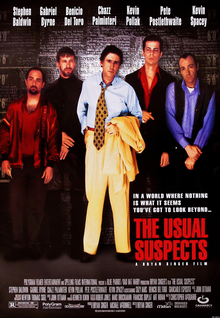
The Usual Suspects

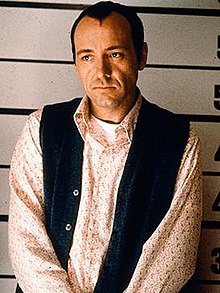
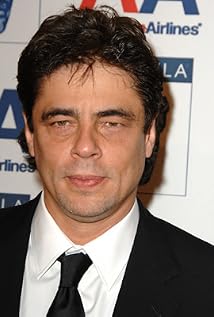
Recently, I watched a movie with Benicio Del Toro in it, and was reminded of the classic, The Usual Suspects. Just this weekend I heard an announcer on ESPN refer to someone in the offices of the NFL as Keyser Soze. I had to chuckle that Verbal's character has persevered so long.

Given the name of our site, I started to relate the cast of The Usual Suspects to some of our NYUS authors.


Toni Anderson would probably be our Keyser Soze. She is all innocent and smiles on the outside, but inside lurks a calculating author of romantic thrillers.

I mumble a lot, so surely I must be the Benicio Del Toro character. :) 


Gabrielle Byrne’s character is the leader of sorts. That would have to be Anne Marie Becker, as she shepherds the NYUS authors, and keeps us on a clear path.


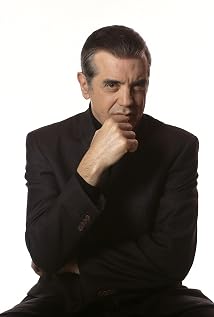
Chazz Palminteri is the US customs agent who finally puts the pieces together. I’ll go with Julie Moffet on that one. Her Lexi Carmichael would have figured out who Keyser Soze was from the get-go.

Okay, I know I’ve gone off on a bit of a tangent here, but deadlines and commitments have stolen away my blog topic muse! 

Are there any characters out there that our NYUS authors remind you of, or are there any Hollywood characters that you think take after you?


More Popular Posts